
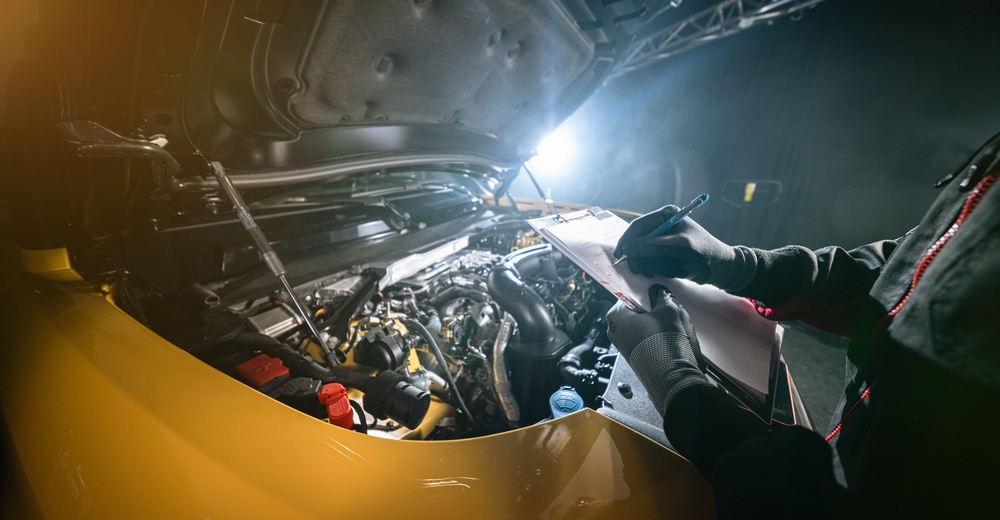
We recently approved the largest individual warranty claim since launching in 2021, authorising £29,518.82 towards the repair.
The claim followed a major engine failure on a seven year old Mercedes-Benz E53 AMG with 48,781 miles on the clock. The vehicle suffered extensive damage following oil starvation, with a brand-new replacement engine originally priced at £43,700.95.
After investigating the available repair options, WSG sourced a used replacement engine from Germany for £16,000 +VAT.
The total repair cost reached £31,393.58, with WSG authorising £29,518.82 including VAT towards the repair.
The case is an extreme example of how quickly repair costs can escalate when a major component fails. But it also highlights an important point for dealers: average claim figures only tell part of the story.
Our claims data provides a broader view of the repairs affecting used vehicles and the potential costs that can arise under a used car warranty, including how often different faults occur, what they typically cost to repair and how claim rates vary between models.
As WSG Group Director Steph Newbery explains:
“Without substantial warranty support, a repair of this size could leave a motorist facing an extremely difficult decision about whether their vehicle was economically viable to repair.”
Average repair costs only tell part of the story
Most warranty claims don’t run into five figures.
Our internal-combustion-engine warranty data shows that engine repairs had the highest average claim cost of any major repair category, at £3,906.79.
Other significant categories included:
- Steering rack and pinion repairs: £1,708.51
- Diesel particulate filters: £1,559.62
- Gearboxes: £1,380.95
- Dual-mass flywheels: £1,115.75
- Turbochargers: £1,042.74
These figures show the typical cost of different repairs, but individual claims can be much higher.
Among WSG’s highest-value claims was a £23,044.70 Jaguar F-Pace repair requiring a replacement engine and associated components. A Ford Ranger also generated a £10,311 claim after requiring a new engine and turbocharger, alongside diagnosis and working materials.
These examples show how much individual repair costs can vary, particularly when a major component needs replacing.
For vehicles with more expensive or complex components, understanding typical repair costs can help dealers assess the potential cost of future repairs.
Why frequency and repair cost should be considered together
Claim rates can show how frequently warranty claims arise across a group of vehicles, but they don’t show the potential cost of every individual repair.
Our data, during the latest 12 month period analysed, shows Mercedes-Benz E-Class models recorded a 25.93% claim rate, with an average warranty claim value of £623.32.
This doesn’t make the average figure misleading. It reflects the experience across a wider group of vehicles, rather than the outcome of every individual claim.
The same applies when using reliability or claims data to assess a used vehicle.
Age, mileage, service history, condition and previous use can all affect an individual vehicle, so data from a wider group cannot predict whether a specific fault will occur.
For dealers, looking at both claim frequency and the types and costs of repairs behind those claims provides a more useful picture when assessing used stock and considering warranty protection.
The most common faults aren't necessarily the most expensive
Looking at the most frequent claims adds another view of the overall claims picture.
Our analysis found that NOx sensors were the most common individual claim, accounting for 2.45% of all claims, with an average repair cost of £590.26.
Other frequently occurring repairs included:
- Battery failures: 2.20% of claims, averaging £255.56
- Water pumps: approximately 2% of claims, averaging £415.54
- Thermostat and thermostat housing faults: approximately 2% of claims, averaging £352.87
- Alternators: 1.98% of claims, averaging £470.91
These figures show that the most common repairs are generally much lower in cost than the high-value engine failures highlighted earlier.
For dealers, this distinction is useful when looking at warranty activity across used stock. Frequent repairs can still take up workshop time and add to aftersales workload, even when individual claims are relatively modest.
Model claim rates can vary significantly
Our warranty data also shows that claim rates can vary significantly between models.
Among vehicles meeting WSG’s minimum data threshold, the lowest claim rates were recorded by:
- Ford Fiesta: 9.55%
- Mini Cooper: 11.49%
- Volkswagen Polo: 13.89%
Average claims for these models ranged from £396.76 for the Volkswagen Polo to £497.74 for the Mini Cooper.
At the other end of the data were:
- Range Rover: 52.65%
- Land Rover Discovery: 51.64%
- Range Rover Sport: 47.17%
Average claims for these models ranged from £815.55 for the Discovery to £1,109.52 for the Range Rover Sport.
These figures don’t predict what will happen with any individual vehicle, but they show how claim rates and average repair costs can vary between models.
For dealers, model level claims data can provide useful context when assessing used stock, alongside factors such as mileage, service history and vehicle condition.
Labour can change the final repair bill
Parts are only one part of the cost of a warranty repair. Labour can also add significantly to the final repair bill.
WSG recorded average labour costs of:
- £191.18 for turbocharger repairs
- £188.42 for gearbox repairs
- £138.54 for water pump replacements
- £120.59 for thermostat and thermostat housing repairs
For major engine failures, average labour costs reached £408.08 before replacement components and associated work were included.
WSG’s previous analysis found that the average UK labour rate associated with warranty repairs reached £69.22 per hour during 2025, a 5.08% increase year-on-year.
The work involved in diagnosing and repairing modern vehicles can also add to the overall cost. Modern vehicles combine mechanical components with electronics, sensors, emissions systems and software, so some faults require specialist equipment, technical expertise and more time to diagnose.
Parts availability can also affect how a repair is managed. In the E53 AMG claim, sourcing a used replacement engine provided an alternative to the cost of a new unit, but the component still had to be sourced and transported before the repair could be completed.
What should dealers consider?
Major component costs
Average repair costs can provide useful context, but dealers should also consider the potential cost of major components such as engines and gearboxes when assessing repair exposure. While major failures are relatively uncommon, they can have a significant impact when they occur.
Vehicle history
Service records, mileage, previous usage and overall condition can provide useful information when assessing a vehicle and preparing it for sale.
Vehicle complexity
The type and specification of a vehicle can affect the work required when something goes wrong. Premium and high-performance vehicles may use more complex components or require specialist equipment and expertise, which can influence repair costs.
Customer understanding
Where a warranty forms part of the sale, customers should have a clear understanding of the protection available and how claims are handled.
Taking these factors into account can help dealers make more informed decisions when preparing and retailing used vehicles, while giving customers clearer expectations around ownership and repair costs.
Looking beyond the headline figures
The £29,518.82 E53 AMG claim sits within a much broader picture of warranty activity.
Since 2021, Warranty Solutions Group has paid more than £30 million across over 65,000 approved warranty claims, while building a network of approximately 3,000 dealer partners across the UK.
The vast majority of those claims are for repairs nowhere near the scale of the E53 AMG.
As Steph Newbery notes:
“A suitable warranty can provide motorists with an important financial safeguard against eligible, unexpected repair costs that might otherwise have to be paid from household savings or placed on credit.”
For dealers, claims data can provide useful insight into common repairs, claim frequency and repair costs, but it cannot predict exactly what will happen with an individual vehicle. Good vehicle preparation, clear information and an understanding of the warranty protection available can help dealers and customers put the potential costs of ownership into context.
Frequently asked questions
What is the average cost of a used car repair?
Repair costs vary significantly depending on the fault, vehicle and parts involved. Our claims data shows average costs ranging from a few hundred pounds for common repairs to several thousand pounds for major components such as engines and gearboxes.
What are the most common used car warranty claims?
According to Warranty Solutions Group claims data, NOx sensors were the most common individual claim, accounting for 2.45% of claims, followed by battery failures at 2.20% and water pumps at approximately 2%.
Can warranty claims data predict whether a used car will need repairs?
No. Claims data can show patterns across a wider group of vehicles, but it cannot predict whether a specific used car will develop a particular fault. Factors such as age, mileage, service history, previous use and vehicle condition can all affect individual repair risk.
What is Warranty Solutions Group's largest warranty payout?
Warranty Solutions Group’s largest individual warranty claim to date is £29,518.82, authorised towards the repair of a seven-year-old Mercedes-Benz E53 AMG following a major engine failure. The total repair cost was £31,393.58, with WSG sourcing a used replacement engine from Germany as an alternative to a new engine originally priced at £43,700.95.
